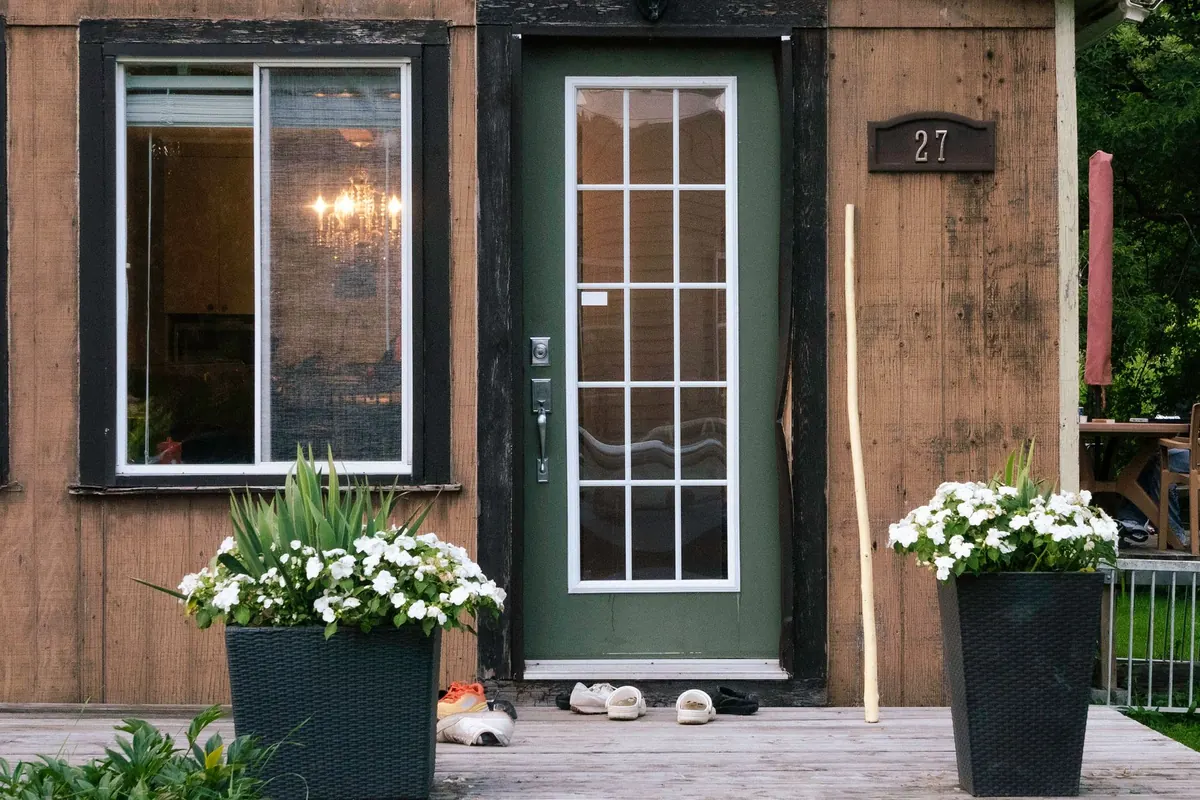
A front door ordered in February and the same door ordered in June are two different projects. The joinery hasn't changed, but the surveyor's diary, the glass supplier's production run and the fitter's calendar all have. Local suppliers tend to work with small teams and busy workshops, which is often why their work is good and also why their lead times move. Planning around those rhythms, rather than assuming a fixed number of weeks, is the difference between a tidy installation and a fortnight of plywood screwed over the doorway.
Begin With the Supplier's Calendar, Not Your Own
Most suppliers advertise a lead time. Treat that figure as the opening line of a conversation, not a promise for your particular job. A workshop quoting eight to ten weeks for standard casement windows might be quoting four weeks for a single internal door, and closer to twelve for anything with a bespoke frame, arched head or a colour outside its usual range.
Ask what the lead time actually is this month, and then ask what it is measured from. The answer matters more than the number. Some suppliers start the clock when the deposit clears, others when the signed technical drawing comes back, others only when the survey has been completed and approved.
Questions worth asking before you commit
- What is your current lead time for this exact product, and is it longer or shorter than usual right now?
- Is that measured from order, from deposit, from survey, or from drawing approval?
- How far ahead is your survey diary booked?
- How far ahead is your fitting team booked?
- Do you have any closures coming up — August, Christmas, local holidays?
- Does delivery to site add time to the figure you've just given me?
- What would push this order to the back of the queue, and how do we avoid it?
The answers tell you where to spend your attention. If the survey is the bottleneck, book it now and finalise the details afterwards. If production is the bottleneck, slow down and get the specification right the first time, because a change order at week six is worse than a delay at week one. And if the fitting team is the bottleneck, you may be able to take delivery earlier and hold the units on site — but only if you have somewhere dry, flat and genuinely out of the way to put them.
The Measurement Stage Decides Your Timeline
Measurements are quick. The decisions that surround them are not, and that is where most projects lose time. Settle the opening direction, the threshold detail, the glazing specification, the finish and the ironmongery before anyone arrives with a tape. A surveyor who measures an unresolved opening will measure it again, and every re-survey is a new place in a queue you had already left.
Think about what the surveyor needs to see. Plaster finished rather than half-hung. Fitted furniture moved away from the reveal. Access to both faces of the wall, not just the room you've cleared. If you are managing the project yourself, be clear about who is taking responsibility for the sizes. A supplier's own surveyor carries the risk of a wrong measurement; your own measurements do not.
It is worth asking whether the supplier will accept a provisional order with a final measure later. Some will, and it can protect your production slot while the last of the building work finishes. Others won't, and it's better to know that early than to assume it.
Ordering: Make Sure the Clock Starts on the Right Day
A surprising number of delays are self-inflicted, and they usually happen at the point of ordering. You agree the price in March, sign the drawing in April, and only then discover the lead time was counted from the signature. Confirm in writing the date the lead time begins, and check that the supplier's version of that date matches yours.
Get the delivery expectation in writing too — a week rather than a day is realistic for a workshop juggling several sites. Ask who is responsible for the units between arrival and installation, and what happens if your site isn't ready when the van turns up. Storage charges and re-delivery costs are the sort of thing that only appear on the invoice.
Delivery, Storage and the Gap Before Fitting
Delivery day is not installation day, and the gap between them is where careful plans quietly fall apart. A delivery slot can land a week before a fitter is free, which means the frames need somewhere to live. Flat, on bearers, off the concrete, under cover, and away from the route people use to carry rubble out of the house.
Check the consignment on arrival. Sizes, handing, finish, ironmongery bags, glass units, and the small parts that are easy to sign for and impossible to find later. Report anything wrong within the window the supplier specifies, in writing, with photographs. If you have to sign for an unchecked delivery, say so on the paperwork.
Access deserves a walk-through before the day. A wide sliding unit that clears the doorway on paper may not clear the courtyard gate, the narrow lane or the turn at the top of the stairs. Measure the route, not just the opening.
Installation Sequencing, Weather and Living on Site
Exterior work is weather-dependent in ways interior work is not. Sealants and foams have temperature and moisture limits, and a call to the fitter on a wet morning will usually buy you a better result than pushing ahead. Look at the forecast before you lock the installation week, and ask what the fitter's contingency is if the first day is lost.
Then plan how you will live. Replacing one room at a time keeps a kitchen and a bathroom usable and gives you a lockable, weathertight house every evening. If the front opening is going to be out for a day, know now where the temporary door is coming from. And be realistic about heating: a house with several openings removed in January will be cold, and that is easier to accept when you have planned for it.
Working Backwards From Installation Day
Rather than guessing forward, pick the week you want the work done and count backwards. It usually looks something like this:
- Choose the installation week, allowing for the fitter's own availability.
- Subtract the delivery window between arrival on site and the fitting team starting.
- Subtract the production lead time, counted from the date the supplier confirms.
- Subtract the survey, plus any days needed to approve the drawing afterwards.
- Subtract the decisions you still have to make — finish, handles, glazing, threshold.
What remains is the date by which you need to have chosen everything. It is often earlier than people expect, and it is the only date in the whole schedule that you fully control.
The Buffer Is the Plan
Build slack in rather than hoping for it. Two weeks on an exterior project is a reasonable cushion; more if your order includes anything bespoke, and more again if you are ordering in late spring or early autumn, when everyone else is also trying to be weathertight before the season turns.
Tell your supplier which date is fixed and which is flexible, and be honest about the difference. A wedding, a move-in date or a business opening is immovable; a preference for finishing before a holiday is not, and suppliers respond better when they know which is which.
Finally, keep the schedule somewhere you can both see it: survey booked, drawing approved, deposit paid, production slot confirmed, delivery week, fitting week. When something slips — and something usually does — you want to know immediately which later date it affects, rather than discovering it when the van is already outside.
Photo: OrnaW / Pixabay